
Hong Kong farmers face uncertain future as back-to-back typhoons destroy crops
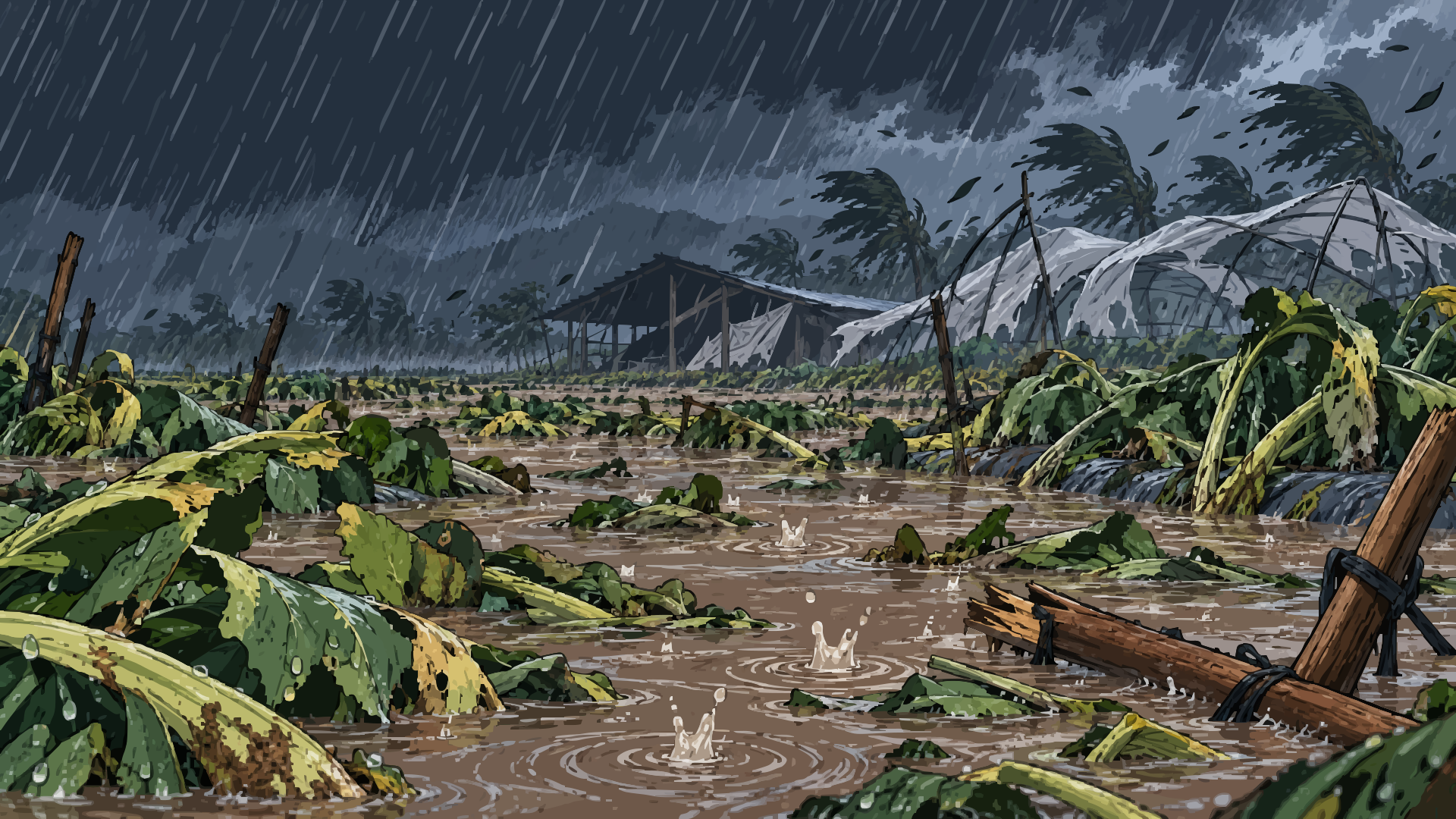
With Hong Kong resuming from Super Typhoon Ragasa’s two-day disruption, 30-year-old farmer Lam Lit-hang stood in knee-deep muddy water in the northern New Territories, staring at the complete ruin of his work.
Before him, more than 10,000 rice shoots lay broken in the floodwaters, their stems snapped by the storm’s fury, all transplants he had made just 10 days earlier.
This was Lam’s second complete crop destruction in three months because of T10 typhoons. The latest blow came from Ragasa, followed by Typhoon Whipa, which destroyed his previous planting and resulted in over HK$50,000 in losses.
“Nothing has gone right with planting the rice this year,” said Lam. “We thought we were going to get one harvest, but now it’s a total loss.”
While Chief Executive John Lee Ka-chiu said Tuesday the government had managed to minimize Ragasa’s damage and recover rapidly, some believe Hong Kong’s agricultural sector is being left behind.
For Lam and other farmers, this season’s back-to-back typhoons have created a cycle of loss and recovery that is becoming unsustainable. With financial and operational resources stretched thin, many now doubt their ability to continue farming if such weather patterns persist.
“The climate was unstable this year, we planted seedlings only to see them washed away,” said 73-year-old Leung Yat-shun, surveying his Shun Sum Yuen Farm where Ragasa’s chest-high floodwaters had submerged approximately 70,000 young sunflower plants that had just reached knee-height.
Spring drought and summer rainstorms have destroyed his plants while making other farm operations impossible. Leung’s sunflower fields, which normally generate crucial income through HK$50 per-visitor admissions, have failed to produce any tourism revenue this season.
“It’s really hard to make a living as a farmer in Hong Kong,” said Leung.
The Agriculture, Fisheries and Conservation Department established an emergency relief fund after Ragasa damaged approximately 300 hectares of farmland across the New Territories. However, Lam said it “roughly covers the seed cost for one rice season” without disclosing the detailed number.
“Typhoons are natural disasters, there’s nothing the government can do about that. It’s already good that they provide funds,” he said. “After all, agriculture contributes so little to Hong Kong’s economy, it can’t be their priority.”
The agricultural sector contributed less than 0.1% of GDP in the second quarter of 2025, compared to Hong Kong’s HK$758 billion economy, according to the Hong Kong Monetary Authority.
The conversation about farming never moves beyond our small circle. It feels like we’re the only people in this city who care about farming.
One week after Ragasa, as floodwaters receded from the fields, Leung commenced his third sunflower planting this year, starting seeds in small pots for later transplantation. Nearby, his wife repainted the rainbow-colored windmills that once dotted their sunflower fields.
Meanwhile, Lam focused on administrative tasks: calculating unfulfilled orders from the previous season and arranging compensation or refunds for customers.
“This season we’ve stopped taking pre-orders,” Lam said. “It’s impossible to predict whether we’ll have a bumper harvest or total loss.”